

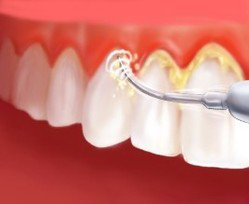
Scaling is a dental procedure used to clean teeth and gums to avoid excessive plaque building up inside the mouth. It is a routine procedure for patients with gum diseases. Scaling combines with root planning procedure known as deep cleaning. Poor Dental hygiene cause food deposits around our teeth and gums. With time, the deposits harden and cannot be removed by regular brushing and flossing. These deposits provide a safe haven for bacteria to grow and multiply in millions. If left untreated, it leads to gum bleeding and bad breath. Ultrasonic equipment is used for dental cleaning or scaling. The equipment consists of a metal tip coupled with a water spray which vibrates at high speed when activated. Due to vibrations, it loosens the hard deposits around the teeth and gums and makes them fall off from the surface.
Note: Prices are indicative and can vary on clinical diagnosis
The food particles combine with saliva, bacteria, proteins make a thin layer inside the mouth by covering teeth. The thin layer of the film is known as plaque which contains bacteria and causes gum diseases and tooth decay. Plaques can be removed through brushing, flossing, and regular dental cleanings. Healthy gums are attached to the tooth just 1 to 3 millimeters below the gum line. When gums are diseased, the tissues loosen and develops deeper pockets affecting the area and providing space for plaque development. Plaques are responsible for bad breath and bleeding gums worsening the dental problems. Thus, Dental Scaling is an important procedure for all to have healthy gums and breath along with clean and shiny teeth.

SCALING (TEETH CLEANING)
Team of 14 Specialists













Cost of Scaling (Teeth Cleaning) in Gurgaon
₹
1000 ₹800 (20% Off)₹1500 ₹1200 (20% Off)₹
2000 ₹1600 (20% Off)₹4
00 ₹320 (20% Off)₹
10,000 ₹ 8,000 (20% Off)₹
12,000 ₹ 9,600 (20% Off) Onward
When Is Dental Scaling Necessary?
Reviews
After Care
FAQ
- Q1: What is the difference between scaling and polishing?
- Q2: Why do gums bleed?
- Q3: How often should I have professional teeth cleaning?
- Q4: Can scaling cause sensitivity?
- Q5: What affects the cost of dental cleaning?
Scaling removes plaque and calculus, while polishing helps smooth selected surface stains. The required procedure depends on your gum and oral-health assessment.
Bleeding gums may be related to gum inflammation or other causes. Persistent bleeding should be assessed by a dentist rather than self-diagnosed.
There is no universal interval for everyone. Routine dental check-ups are commonly recommended every six months, while the appropriate cleaning interval depends on gum health and calculus build-up.
Temporary sensitivity can occur in some patients, especially when deposits or gum inflammation were present. The dentist can advise when symptoms need review.
The amount of deposits, gum condition, number of visits and whether deeper periodontal treatment is required can affect the fee.
Developed By Team Variance